Regulatory intelligence built on context graphs

Regulatory monitoring isn’t a “search problem.” It’s a systems problem: information arrives continuously, changes meaning over time, and must be interpreted in context.

Carver’s technology is built around a regulatory context graph: a living representation of regulatory knowledge that encodes entities, relationships, timelines, and provenance so retrieval and reasoning can be guided by structure, not guesswork. This enables Carver to deliver intelligence as explainable subgraphs with a defensible evidence trail, rather than fragile “search + summarize” outputs.
Book a DemoAI-powered regulatory intelligence workflow visualization

Why this matters

Cross-document dependency

Regulatory meaning lives in amendments, exceptions, definitions, and incorporations by reference

Time-aware reasoning

“What’s in force now?” and “What changed since last quarter?” require versioning and effective-date logic

Defensibility

Claim-level provenance ensures auditability, traceability, and trust

Personal relevance

User activity traces become signals for relevance and routing

How It Works

An end-to-end system for capturing, structuring, and delivering regulatory intelligence.

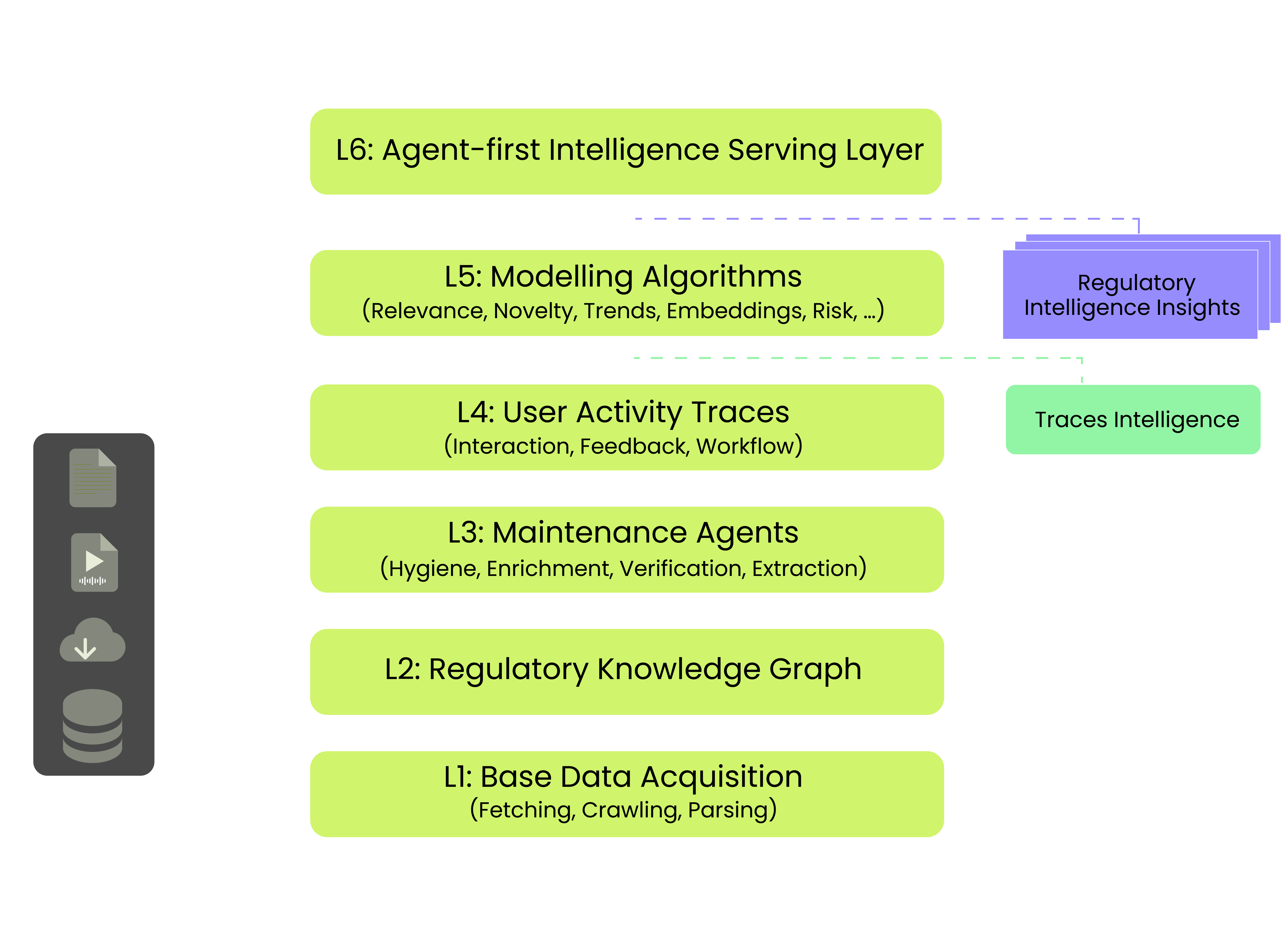
1. Acquire & version regulatory updates

Carver continuously fetches regulatory updates (e.g., notices, speeches, consultations, circulars, press releases) and captures canonical metadata. Ingestion is designed to preserve version history so edits, replacements, and removals don’t silently overwrite the past.

2. Normalize content into structured artifacts

Raw HTML/PDF and extracted text are normalized into consistent, parseable structures to support downstream extraction and verification workflows.

3. Construct the regulatory context graph

Documents are transformed into a queryable graph with stable entity IDs and typed relationships (e.g., amends, supersedes, clarifies, applies_to), grounded in source evidence and annotated with temporal meaning (published/effective/ compliance dates).

4. Maintain and enrich the graph with AI agents

Specialized AI agents keep the graph clean and current: change detection, normalization, entity resolution/deduplication, edge cleanup, and enrichment via cross-references. Human verification is applied where impact is high or confidence is low.

5. Instrument and capture user activity traces

Carver records interaction and feedback signals (queries, clicks, traversals, saves, exports, “useful/not useful,” annotations) so the system learns what matters to different teams and workflows—without sacrificing auditability.

6. Generate intelligence signals

Models operate on top of the graph to produce explainable outputs: relevance scoring, novelty/change magnitude, risk propagation, embeddings, and trend detection. Importantly, model outputs are written back as explainable annotations, not opaque conclusions.

7. Deliver agent-first intelligence with evidence

Insights are delivered via pull (Q&A, drill-down to evidence), push (triggered alerts), and continuous digests—always packaged with a defensible evidence trail: the nodes/edges used, source documents, and timestamps.

Credit card mockups

A graph-native model of regulatory context

Entities, relationships, time, and provenance - so the system can reason over what changed, what’s in force, and why it matters.
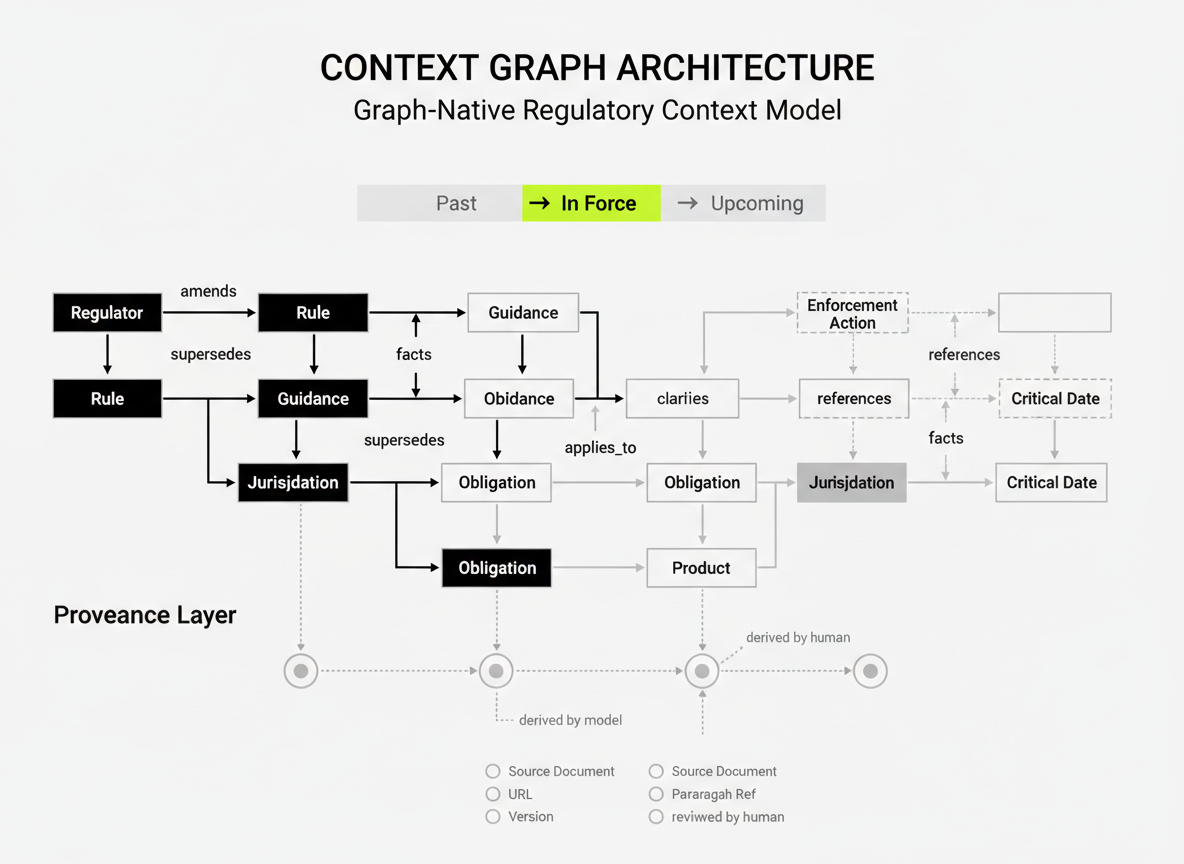
Carver’s context graph represents regulatory knowledge as a graph of nodes and edges: regulators, rules, guidance, enforcement actions, obligations, jurisdictions, products, and critical dates become nodes; relationships like amends, supersedes, clarifies, applies_to, and references become edges.

Provenance is explicit

every claim and relationship traces back to a source artifact (URL, paragraph, version).

Time is native

nodes/edges can be valid within time windows to support “as-of” reasoning.
Carver also enforces a clean separation between facts (grounded with provenance) and interpretations (attributed to models and/or reviewers), so compliance teams can see not just the conclusion, but how it was derived.

Signals generated on top of the graph

Entities, relationships, time, and provenance - so the system can reason over what changed, what’s in force, and why it matters.
Decision-support signals attach directly to graph nodes and edges, not produced in isolation
Signals include relevance scoring, change magnitude, risk propagation, embeddings, and trend detection
All outputs are stored as explainable annotations with scores and rationales tied to graph paths and deadlines
No opaque model-only conclusions—every insight remains traceable and reviewable
User activity continuously strengthens signals and improves prioritization over time
Subgraphs are ranked differently for legal, compliance, and risk teams
Updates are automatically routed to the appropriate owners and workflows
Feedback loops surface gaps and guide continuous system correction
What an Insight Includes
What an insight includes

Impact summary

What changed, why it matters, key requirements, and risk impact

Critical dates

Published, updated, effective, compliance, and comment deadlines

Actionables

Policy, process, reporting, technology, data, and training implications

References + provenance

Linked statutes, rules, precedents, and full source trail

Scores

Impact, urgency, and relevance with confidence indicators

Explore the platform

Discover how Carver Agents delivers real-time regulatory intelligence.

Every Insight Includes a Defensible Evidence Trail

Full traceability across nodes and edges used, source documents referenced, and timestamps recorded.